

Recently I discovered a new entrant to the 28mm STL market called Colonel Muller Miniatures. The 1940 French troops I have printed for my ongoing project have turned out wonderfully. Being excited about the miniatures I reached out to Colonel Muller Miniatures asking if they would be interested in an interview for Iron Dice Gaming. Stéphane, the man behind Colonel Muller Miniatures, quickly and happily accepted the offer. I’m happy to present that interview for our readers below.
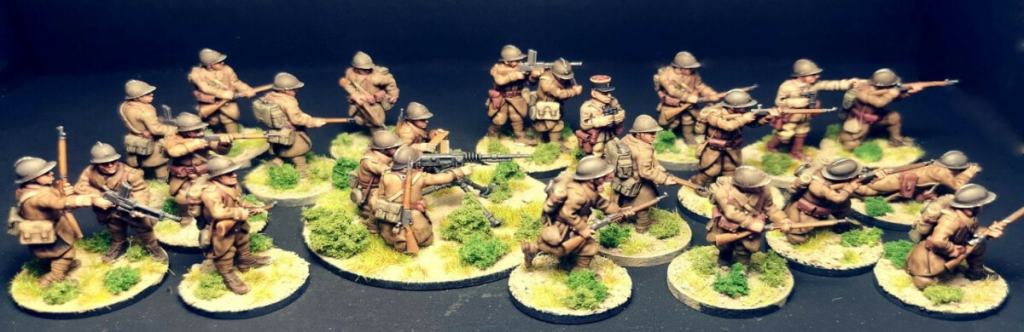
First off, I want to cover some notes regarding our interview. We conducted the interview over email for ease of scheduling. I have reordered some of the questions and responses for a better flow to the article as the interview was conducted over several rounds of emailing. Stéphane expressed to me at the outset that English is not his primary language and I have transcribed his answers exactly here.
Evan: So Stéphane, to kick off our interview could you just tell us a little about yourself, your personal wargaming/design history, and also about Colonel Muller Miniatures?
Stéphane: Good evening Evan and a big thank you for your support regarding my range of 1940 French army miniatures. I hope you will be fully satisfied with the new references, such as the VBs. Next miniatures will represent a complete French HQ, I’m also print-testing another reserve French combat group “on alert”.
It is a real honor and a pleasure for me to answer your interview, the first of my “career” as a 3D modeler! On a personal level, I turned 40 this year, I am a high school history teacher. History has been my passion since adolescence, thanks in particular to my two grandfathers who were able to fascinate me with stories of the Second World War. Or the personal story of my great-grandfather who was in the First World War and had the chance to come back. These historical stories rocked my childhood.
Like many little boys, I created my first battlefields with plastic soldiers from well-known brands, including Airfix or the superb Matchbox. I didn’t even dare to dream of what we can do today with 3D printing.
About 3D printing, I started creating models in December 2018. With my first printer in FDM, I had the opportunity to make two small armies to represent the French campaign in 1940 (already! ).
A German and a French army, including armored vehicles but also planes. I kept the models although they have aged badly since! I quickly turned to the production of miniatures at various scales with a resin printer, mainly in 6, 10, 15 and 28mm. I made sets, vehicles and miniatures for Stalingrad (6mm and 25mm), Normandy (1944) in 15mm scale and many other things going through the Middle Ages, the Napoleonic era and the fantasy universe. I probably modeled and tested several thousand different miniatures before recently getting started with Colonel Muller Miniatures.
Colonel Muller is a pseudonym that I have been using for almost 10 years on various wargaming sites and miniature game rules. My objective is to offer miniatures that I would like to find as a player and make me happy above all, by creating miniatures on themes that I like and that I can share with other players. I recently discovered the immense pleasure of contemplating the photos of my miniatures, printed and assembled by other players. This makes me very happy and I hope to be able to create other ranges.
The common thread of creations will remain the passion and the personal interest that I have for a historical period or a particular army.

Evan: I understand then, since Colonel Muller is a pseudonym, that you are a single-person operation?
Stéphane: I work alone within the framework of this very small company, which was born a month ago and which I hope to be able to develop, parallel to my activity as a teacher, which takes up a lot of my time. This is the reason why I consider this second activity as a passion only and why I plan to create especially miniatures whose subject I like. Passion must remain the common thread.
Evan: I’m impressed by the number of past things you have already done for yourself. Looking to the future are you strictly focusing on 1940s French at the moment, or will we see other subjects from you soon?
Stéphane: I do not intend to limit myself to the period of 1940 because I am passionate about military history in general. I intend to finish my first range properly, because I think it’s important for those who follow me, to bring them the majority of the elements they may need, before moving on to something else.
I often work by period, after these Frenchmen of 1940, I really want to get into German paratroopers, the famous Fallschirmjager. It will rather be an army oriented on 1944, with all that that implies in armament, MG42, Panzerfaust, FG42… Maybe by then I will have changed my mind, but that’s what I want to do after the French!
Evan: With your French releases many of them are labeled as reserve units. I found this interesting and would love to hear what has driven you to pick not only that, but also what to do next?
Stéphane: That’s a great question and I’m glad you noticed this move. I wanted to approach the French army of 1940 with the troops which are certainly not the most impressive but the most representative. It seemed like a good base to me and corresponded to a more historical approach to the hobby.
It was these reserve units which faced the panzer divisions in the Meuse sector and which did not have the necessary means to oppose them effectively. I also wanted to pay modest tribute to these soldiers, these hundreds of thousands of anonymous people who have done their duty for our country. They are very often presented in a negative way in history, even if the recent works of historians tend to relativize this bad image of the French army in 1940.
I also opted for these troops because it allowed me to give equipment standard to these soldiers.
The Lebel model 1886 rifles, the Adrian model 1915 and 1926 helmet, the old model 1920 smocks, mixed with more recent ones, the 1935… So that allowed me to start this army with the most common equipment. For the next productions, we must expect more modern equipment, with other haversacks, MAS36 rifles and MAS38 submachine guns for example.
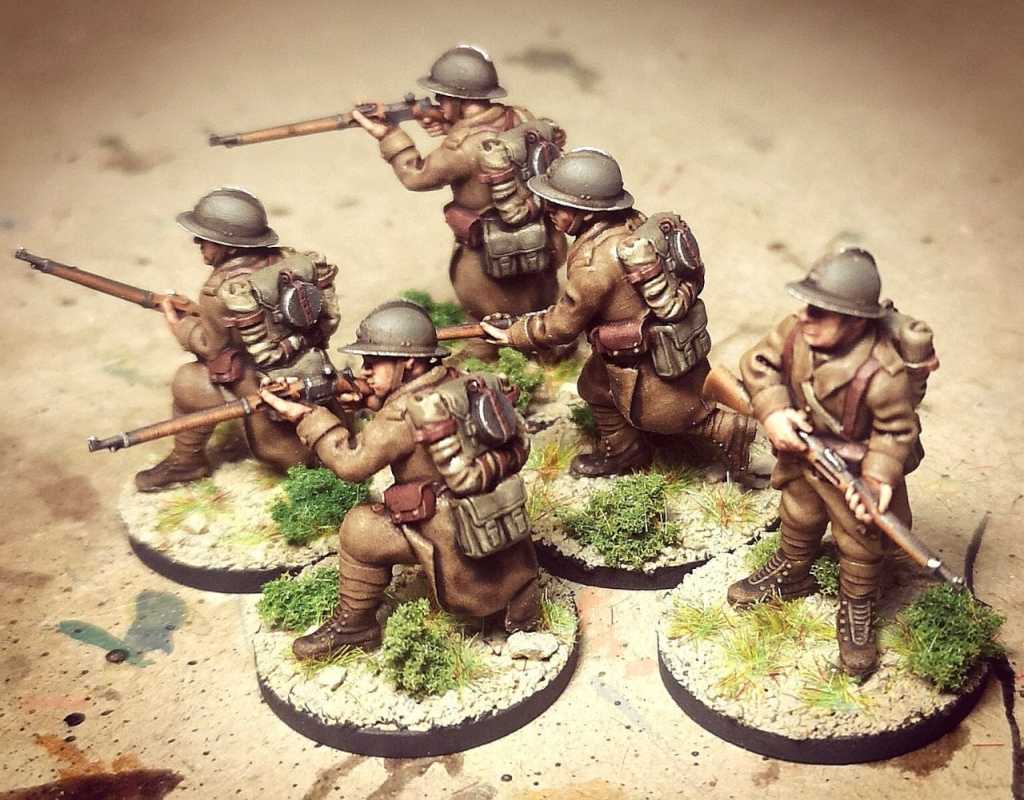
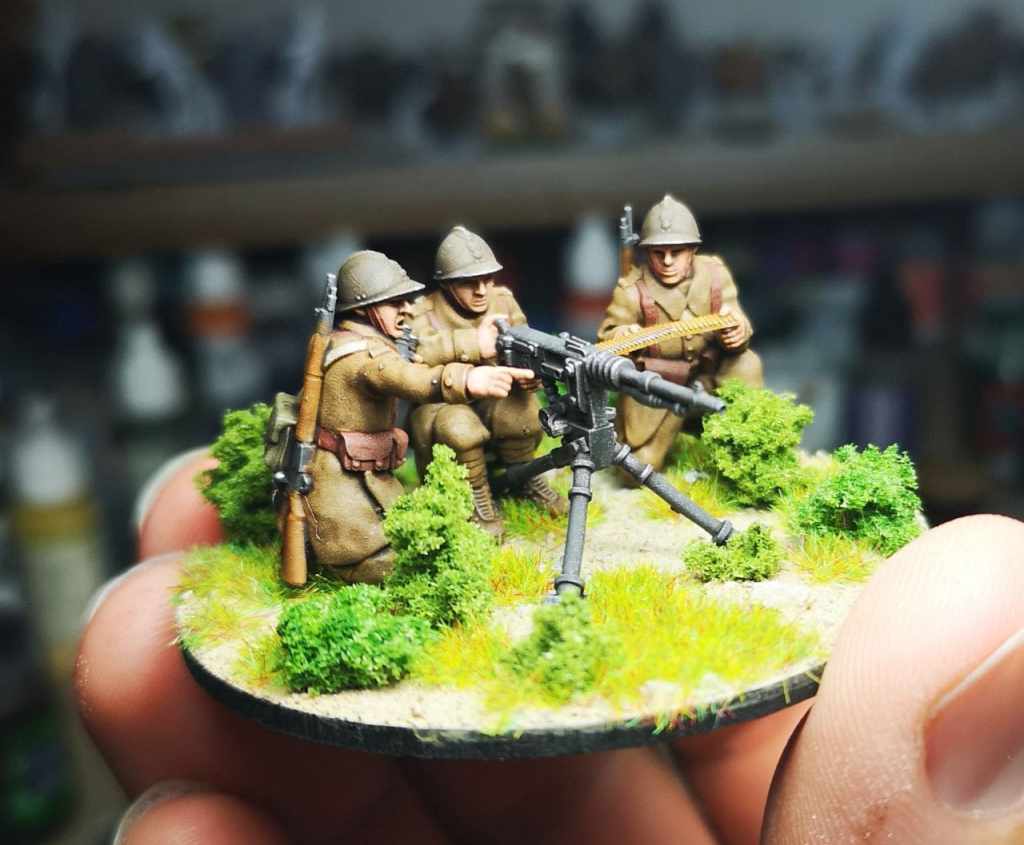
Evan: Personally I find your releases to be of excellent quality and detail. The Hotchkiss has been my personal favorite thus far, and is actually the one that drew me in to your page to begin with.
I am building this force primarily for Chain of Command with a touch of Bolt Action. Do you play any miniatures games currently? If so what games have you been enjoying recently?
Stéphane: I sincerely thank you for your compliments, it’s always a real pleasure when I learn that the players who buy my 3D models are happy. I took real pleasure in modeling the Hotchkiss and this is my first model for the French range.
I am very attentive to the different rules that are available for the Second World War.
I played Blitzkrieg commander, which I like for its fluidity and the uncertain aspect of command actions. Bolt Action, of course, as well as a French rule named Blitzkrieg. I like some ideas proposed in Poor Bloody Infantry, Iron Cross and especially the excellent Battlegroup rule. I’m also considering offering French miniatures in 10mm scale, to match the ‘O’ Group rule, which is battalion scale and which I particularly like.
Evan: I saw on your Facebook page you had shared some photos of a Panhard 178 and a Somua S35 and hinted at a collaboration with another artist as well as a future Kickstarter campaign. Is there anything you can tell us about that at the moment or is it under wraps still?
Stéphane:I actually work with another 3D french sculptor, whose pseudonym is Counlane. We plan to present the elements necessary to represent a DLM, light mechanical division, composed of elite troops and good quality equipment for the time. We are still at the project and model development stage, my colleague Counlane is progressing faster than me in production!
We hope to make ourselves known on the occasion of this first Kickstarter and if it works well, we will continue with other projects related to other nations of the Second World War.
Evan: Is there anything else you’d like to promote or like our readers to know about?
Stéphane: I’m just going to thank you for your interest in my work, for my part, I follow what you do with great interest. I will observe the development of your French army for chain of command, know that it is a great source of motivation to model other miniatures.
I especially appreciate the care you bring to your collection on the historical level, especially with regard to the number of servants necessary for each support weapon. You are the first to send me the photos of my printed miniatures, it seemed unreal and very exciting for the future!
Another thank you to Stéphane for giving us the opportunity to interview a creator. To me the hobby is just as much about the people doing it as it is about the hobby itself. In my opinion his work is one to keep an eye on from here on out.
If you are interested in Stephane’s work at Colonel Muller Miniatures you can find it at: Colonel
Colonel Muller Miniatures – Wargaming 3D
Muller Miniatures – MyMiniFactory
If you want to see my ongoing project of a French force for Chain of Command you can find them here:
Part One
Part Two
 Iron Dice Gaming
2 thoughts on “Interview with Colonel Muller Miniatures”